

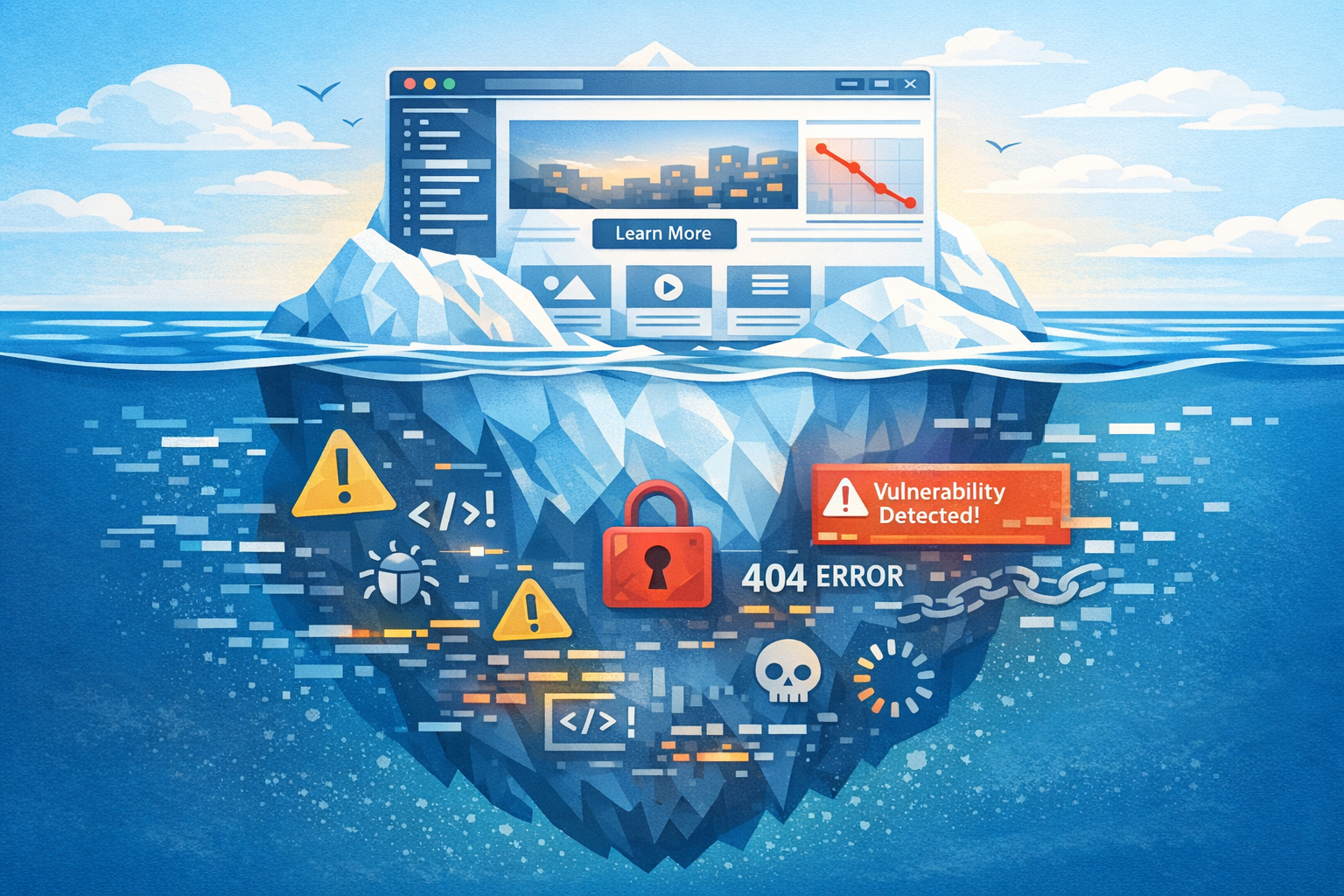
A website rarely fails all at once. More often, small issues begin to accumulate — a skipped plugin update, a minor compatibility conflict, a form that stops submitting correctly, or a gradual decline in page speed. Individually, these problems may not seem urgent. Over time, however, they compound.
Ignoring website maintenance seldom causes immediate disaster. What it does create is gradual instability, increased repair costs, and avoidable disruption.
When maintenance is inconsistent, the same types of issues tend to resurface. Plugins fall out of date, compatibility conflicts increase, and minor glitches become more frequent. Each fix may appear manageable, but repeated disruptions consume time and attention.
Eventually, work that could have been handled as part of ongoing website maintenance and management turns into reactive troubleshooting. That shift often means higher cost and more interruption than proactive care would have required.
Search engines favor websites that are stable, fast, and technically sound. When updates are delayed or plugin conflicts go unresolved, performance can decline gradually. Slower load times, broken links, or minor technical inconsistencies may not be obvious to visitors at first, but they can affect search engine optimization (SEO) over time.
Maintenance helps ensure that technical issues do not quietly erode search visibility or user experience.
Most website vulnerabilities are not the result of sophisticated attacks. They stem from outdated themes, plugins, or core files. As software ages without updates, the likelihood of conflicts and exposure increases.
For businesses operating on WordPress website design platforms, regular updates are one of the most practical ways to reduce avoidable risk and maintain long-term stability.
In many cases, what begins as a small oversight expands into a more complex repair. What could have been handled through routine updates becomes a deeper troubleshooting process that requires more time and coordination — and ultimately results in higher costs than preventative upkeep would have required.
A business website supports lead generation, customer communication, and brand credibility. When maintenance is handled consistently, improvements are easier to implement and updates remain predictable. When it is neglected, the site becomes harder to manage and more expensive to improve.
The cost of ignoring maintenance is rarely dramatic. It is cumulative.
A website can appear functional while underlying issues continue to grow. The absence of visible problems does not necessarily indicate stability.
If recurring issues feel familiar — slowdowns, small errors, periodic fixes — it may be worth evaluating whether your current approach is proactive or reactive. We’re always happy to talk through what your website realistically needs and answer questions about how maintenance supports long-term stability.